|
Staff:
Alfonso
Siani M.D.,
Gianvincenzo
Barba M.D., M.Sc.,
Paola
Russo, B.Sc. Biology
Non
Permanent Staff: Fabio
Lauria, Annunziata Nappo, Marika Dello Russo,
Emilia Donatiello, Annarita Formisano, Sonia
Sparano
Aim
of the Unit:
The
primary purpose of the Unit of Epidemiology &
Population Genetics is to learn the multi-factorial
causes of nutrition-related diseases and to
discover new ways to prevent and treat them. We
strive to accomplish this goal through research
aimed at improved understanding of how
diet-interacting with individual genetic
background-influences health, at the dissemination
of new knowledge about nutrition to health
professionals and the public and at the development
of strategies to enhance public care for nutrition.
Research
Activity:
The
research activity is focused on the understanding
the multi-factorial causes of nutrition-related
diseases. Nutritional factors, interacting with the
environment and the individual genetic background,
play a fundamental role in many complex diseases.
Understanding these interactions could help to
prevent widespread pathological conditions, such as
obesity, cardiovascular and metabolic diseases. The
effort of prevention is of course more useful if
started in developmental age. This is the primary
purpose of the IDEFICS Project (Identification and
prevention of Dietary- and lifestyle-induced health
EFfects In Children and infantS), funded by
European Community (VI EC Programme, 2006-2011,
contract n. 016181) for developing common European
strategies for the primary prevention of childhood
obesity and overweight. This project will allow to
give concrete answer to the EC's request expressed
in the GREEN PAPER "Promoting healthy diets and
physical activity: a European dimension for the
prevention of overweight, obesity and chronic
diseases", Brussels, 2005. For the detailed
description of the IDEFICS Project and Consortium
see http://www.idefics.eu.
The
experimental approach in the epidemiological and
nutritional field of the EPIGEN Unit is based on
the validation of dietary questionnaires for adults
and children and on the methodological strategy for
the assessment of nutritional and metabolic risk
factors for nutrition-related diseases. This
epidemiological approach is supported by the
molecular approach, through the identification and
the determination of genetic variants (Single
Nucleotide Polymorphisms, SNPs) associated to
complex diseases and the analysis of their
interaction of traditional cardiovascular risk
factors.
This molecular approach to the study of complex
diseases has been implemented by the SNPs Lab of
the EPIGEN Unit, whose activity led to the
identification of risk polymorphisms for arterial
hypertension, renal sodium handling and obesity.
In 2008 the National Research Council (CNR) funded
a RSTL project (DG.RSTL.076.003), to be performed
in the SNPs Lab, aimed to the identification of
genetic variants of the MSY (Male Specific) region
of the Y chromosome involved in the pathogenesis of
gender-related complex diseases.
The
EPIGEN Unit's expertise in nutritional and genetic
epidemiology is currently applied to the ongoing
national and international collaborative studies
listed below.
Synthesis
of the research lines :
- Survey of the dietary
habits of adult population samples in different
EC countries to identify dietary patterns and
compliance with dietary
recommendations.
- Research on
gene-environment interactions with regard to the
pathogenesis of cardiovascular and metabolic
diseases.
- Assessment of
nutritional and lifestyle determinants of early
obesity in childhood.
- Educational activities
aimed to increase the knowledge of the public
and of health operators with regard to the role
of diet in the prevention and treatment of
chronic degenerative disease
- Identification of
genetic variants of the MSY (Male Specific
region) of the Y chromosome involved in the
pathogenesis of gender-related complex
diseases.
Collaborative
Project:
|

|
IMMIDIET
(QLRT-2000-00100, EC FIFTH FRAMEWORK
PROGRAMME 2001-2003)
(http://www.moli-sani.org/immidiet_site/project.html)
Dietary
habit profile in European communities with
different risk of myocardial infarction:
the impact of migration as a model of
gene/environment interaction.
Ongoing
population study funded by the EC, aimed
to evaluate:
- the present
dietary habits and the risk profile of
three European communities at different
risk of myocardial infarction (MI);
- the impact of
migration within the EC as a model of
gene/environment
interaction.
|
|

|
THE
OLIVETTI PROSPECTIVE HEART STUDY
(http://www.olivettiheartstudy.org)
Epidemiological
investigation of genetic and lifestyle
determinants of cardiovascular risk
factors, coordinated by Prof. Pasquale
Strazzullo, "Federico II" University of
Naples, Italy. The study has examined a
sample of 1,100 male workers of the
Olivetti factories in Southern Italy. This
project, started in 1970, is still
ongoing, through periodic follow
up.
|
|

|
The
BRAVO Projet / The ARCA
Epidemiological
study of the early determinants (dietary
habits and anthropometric indices) of
childhood obesity in a sample of 6-12 year
children living in Southern Italy.
|
|

|
IDEFICS
project (EC
SIXTH FRAMEWORK PROGRAMME 2006-2011
Contract no. 016181)
(http://www.idefics.eu)
Large-scale
European collaborative study
aimed:
- to
study and compare nutrition, lifestyle
and social factors of 2-10 year
children in 8 European countries, with
particular attention to the
overweight/obesity problem and related
diseases;
- to
promote healthy dietary habits and
physical activity in European children,
involving children and their parents,
schools and institution in a larger
awareness of the overweight/obesity
problem.
|
|

|
THE
WANDSWORTH HEART & STROKE STUDY
(http://www2.warwick.ac.uk/fac/med/research/csri/cvme/whss)
Population-based
survey in South London to estimate the
prevalence of the major cardiovascular
risk factors in both men and women of
different ethnic background, coordinated
by Prof. FP Cappuccio, Warwick Medical
School, Coventry, UK.
Approximately
1,600 men and women aged 40-59 years of
three ethnic groups (white, South Asian
and of African origin) living in South
London were screened for cardiovascular
risk factors.
|
|
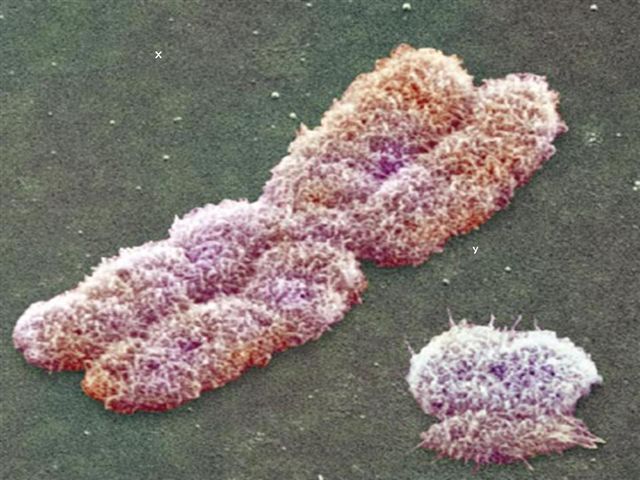
|
DG.RSTL.076.003
/ Identification of genetic variants of
the MSY region of the Y chromosome
involved in the pathogenesis of
gender-related complex
diseases
RSTL Project,
funded by CNR, aimed to the identification
and the molecular characterization of the
genes of the Y chromosome involved in the
pathogenesis of gender-related
multi-factorial diseases.
|
|




